Granny flat power supply in Blacktown: will your existing supply cope, and what are the options?
How a granny flat gets its power, how to tell whether your supply can carry a second home, and when you need a mains upgrade or three phase.
Granny flats are everywhere in Blacktown City. The big flat blocks of Seven Hills, Kings Langley, Lalor Park, Blacktown and Mount Druitt are ideal for a second dwelling out the back, and plenty of families have built one for parents, grown-up kids or rental income. What often gets missed until late in the build is the power supply. A granny flat is a second home, and your existing supply was almost certainly sized for one. This guide explains how flats are usually supplied, how to tell if yours will cope, and what the options are.
How granny flats usually get their power
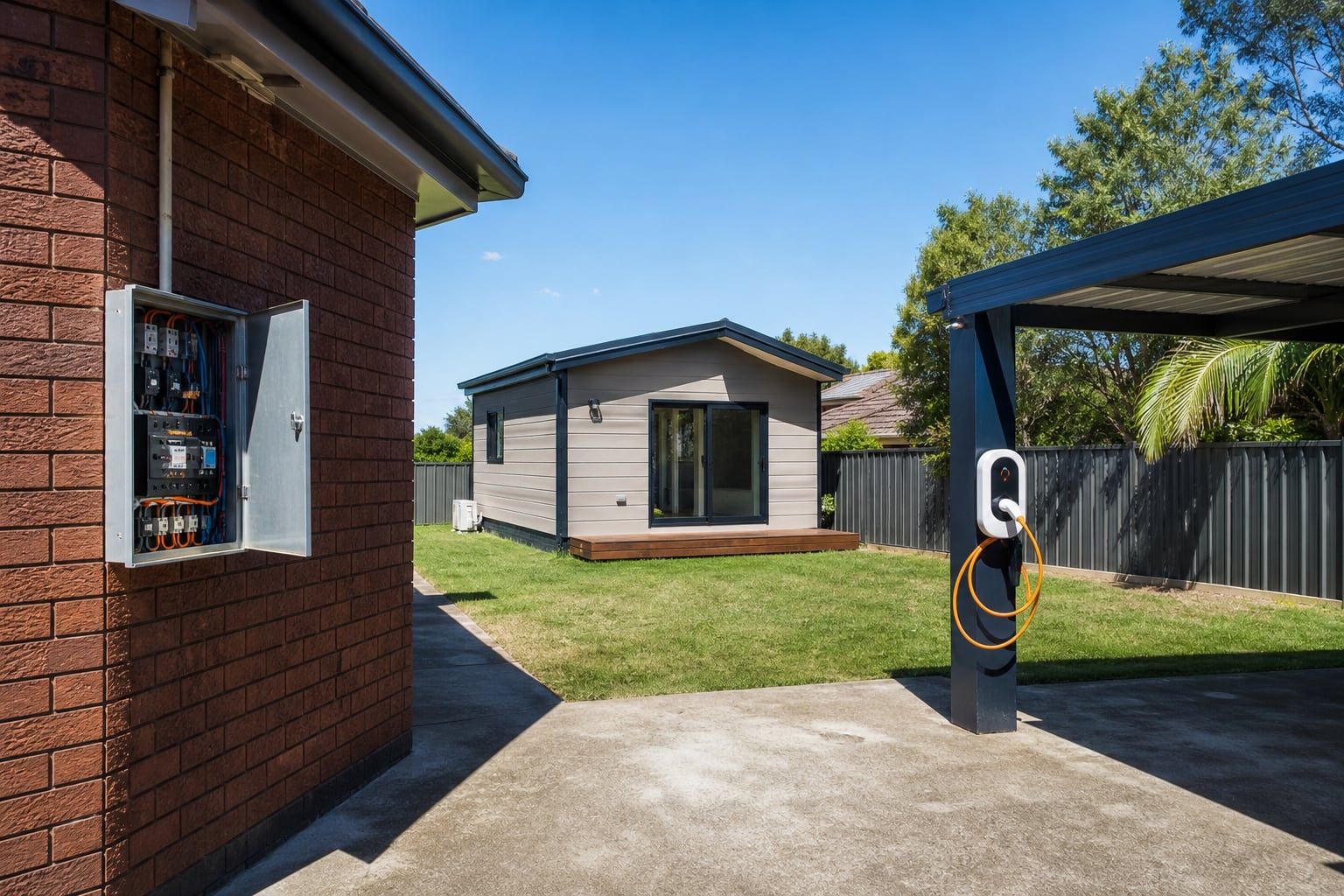
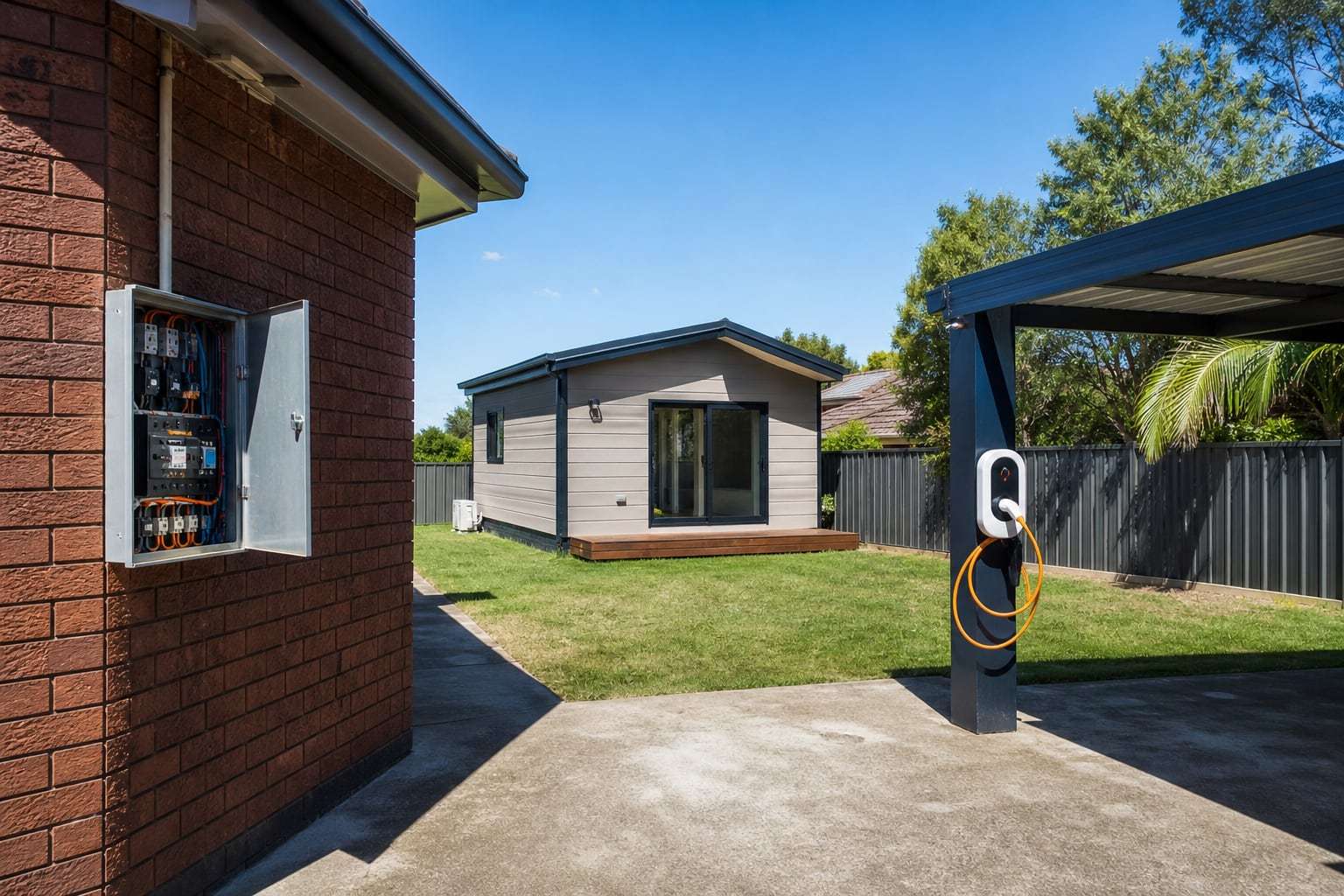
In most Blacktown granny flats, the power comes from the main house. The house’s supply comes in from Endeavour Energy’s network to the meter board as usual. From the house’s switchboard, sub-mains run underground to a sub-board in the flat. The flat’s circuits run from that sub-board.
That means one network connection, one set of consumer mains and one meter now feed two households. Whether that works depends on the size of the supply and how both homes use power.
Why the existing supply often isn’t enough
Most Blacktown homes built from the 1960s to the 1990s were connected on single phase with consumer mains sized for the loads of the time. Picture a hot February evening: the main house runs ducted air, an oven and a dryer; the flat runs a split system, a cooktop and a hot water system; maybe the pool pump is on and a car is charging. Together that can be more than the original mains were ever meant to carry.
Signs you’re already near the limit:
- Lights dim when the air conditioner or oven starts
- The main switch or service fuse trips on hot days
- The meter box is warm or smells hot
- Your electrician has warned the supply is small
Step 1: get a load check before you build
The cheapest time to sort the supply is before the flat is built. Ask your granny flat builder for the flat’s expected load: air conditioning, hot water, cooking, laundry. Your electrician or we can then work out the combined maximum demand of both homes and compare it with what your supply can carry.
Step 2: choose the right fix
Option A: no change
If your supply is already a decent size and the flat is small with gas cooking or modest air conditioning, the existing supply may cope. That’s less common with older homes.
Option B: upgrade the consumer mains
Often the network supply is fine but the house’s mains are small or old. A consumer mains upgrade replaces them with larger cable sized for both homes. It’s a one-day job and much cheaper than fixing problems after the flat is occupied.
Option C: move to three phase
If both homes run ducted air, electric cooking and hot water, or you’re also adding a pool, EV charger or big solar system, a three phase power upgrade is usually the right long-term answer. It needs an application to Endeavour Energy, new three phase mains and a three phase meter arranged by your retailer.
Option D: a separate supply for the flat
In some situations a flat can have its own connection and meter. It depends on the property, the network’s rules and your plans. It’s more complex and not always possible, so ask early.
Step 3: plan the trench and the timing
The sub-mains from the house to the flat usually run underground. If the house’s supply is also going underground, or the mains are being upgraded, it makes sense to do the trenching together. If the build needs site power, a temporary builders supply keeps the house’s circuits free.
Step 4: lodge early
Anything involving Endeavour Energy, especially three phase, needs an application and approval. Lodging early means the supply is ready when the flat is.
What it costs
We don’t quote prices without seeing the property, because the variables are real: cable lengths, where the meter board is, whether the bracket or raiser needs replacing, and what Endeavour requires for your street. After a look, you get a fixed written price for the network side.
A quick checklist
- Get the flat’s expected load from your builder
- Have your existing supply checked before construction
- Decide between mains upgrade, three phase or a separate supply
- Lodge any network application early
- Coordinate trenching for sub-mains and any underground supply
- Make sure the final connection is certified
Talk to us
Call the Blacktown level 2 electrician team before your flat goes in. If you’re weighing up single phase against three phase, our guide to three phase vs single phase power explains the difference.
Updated
Granny flat power supply in Blacktown: common questions
Something else on your mind? Call 0468 449 776 and ask.
Can my granny flat have its own meter?
It's sometimes possible, depending on how the property is set up and the network's rules. Many owners keep one supply and one meter and split costs another way. Ask us early, because it changes the design.
Does the granny flat builder's electrician handle all of this?
They'll do the flat's wiring and sub-board. Anything on the network side, such as upgrading the mains or moving to three phase, needs an accredited Level 2 and a notification to Endeavour Energy.
What happens if we don't upgrade and the supply is too small?
The main switch or service fuse may trip on hot days, the mains can overheat, and you may not be able to connect bigger equipment later. Fixing it after the flat is built usually costs more.